
DevOps Services for Faster, Reliable Deployments
Transform your software delivery with expert DevOps engineering. CI/CD automation, cloud infrastructure, Kubernetes, monitoring, and DevSecOps for modern applications.
What is DevOps?
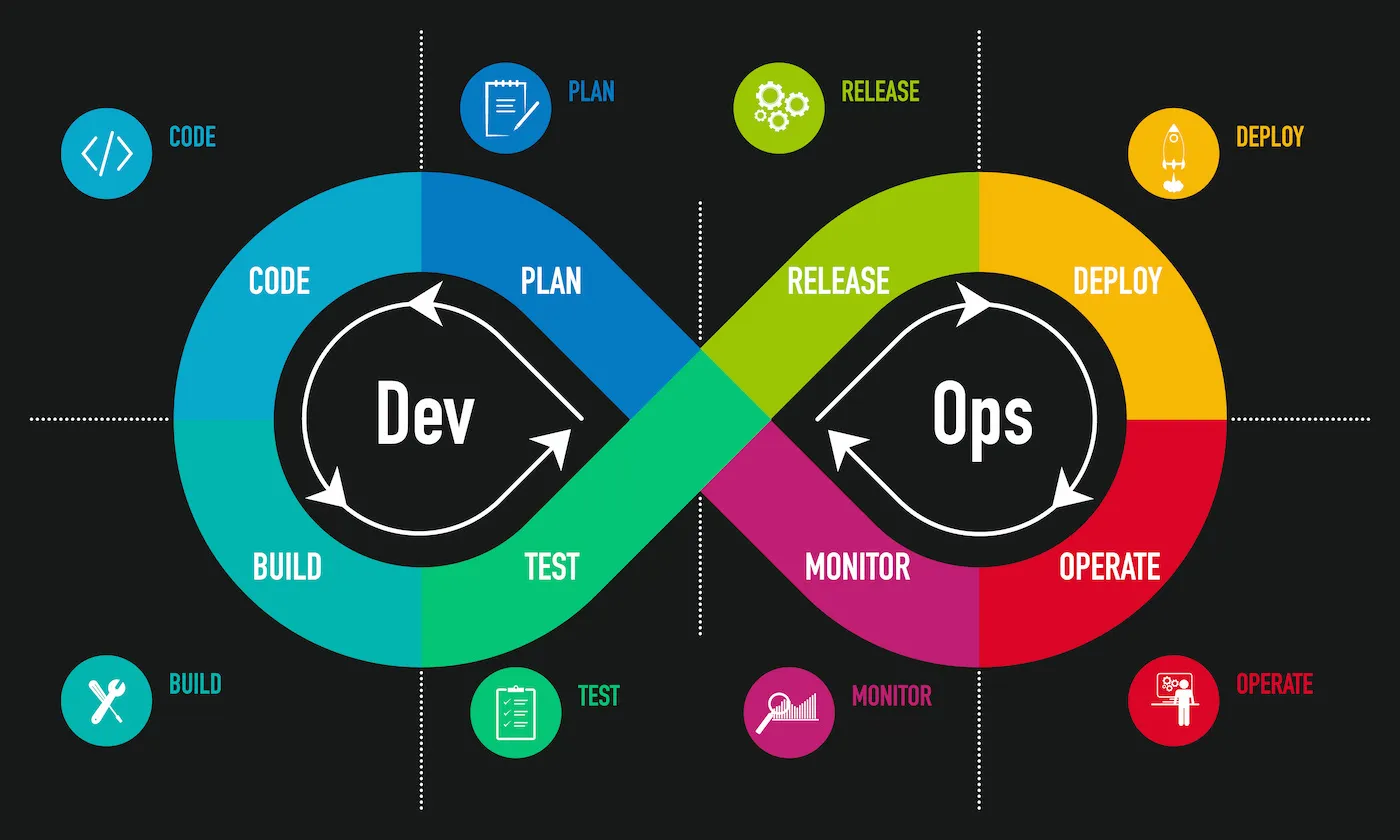
DevOps is a set of practices, tools, and cultural philosophies that automate and integrate processes between software development and IT operations teams. It emphasizes collaboration, continuous integration, continuous delivery, and rapid feedback to improve deployment frequency and reliability.
Faster Time-to-Market
Deploy features 10x faster with automated pipelines
Improved Reliability
Reduce deployment failures by 60% with automation
Enhanced Collaboration
Break silos between development and operations teams
Cost Reduction
Lower operational costs through efficiency and optimization
Why Choose Neuralyne for DevOps
20+ years of DevOps excellence. We've helped startups scale and enterprises modernize with reliable, automated infrastructure.
Cloud-Native Architecture
AWS, Azure, GCP expertise with serverless, containers, and microservices
CI/CD Excellence
Automated pipelines for faster, reliable deployments with zero-downtime
Security-First DevSecOps
Security integrated at every stage with compliance automation
Observability & Monitoring
Real-time insights with logging, metrics, and distributed tracing
Infrastructure as Code
Terraform, CloudFormation, and Ansible for reproducible infrastructure
Cost Optimization
FinOps practices to reduce cloud spend by 30-50%
Our DevOps Services
Comprehensive DevOps solutions from strategy to 24/7 operations
CI/CD Pipeline Engineering
- Jenkins, GitLab CI, GitHub Actions, CircleCI
- Automated build, test & deployment workflows
- Blue-green & canary deployment strategies
- Artifact management & versioning
- Pipeline-as-code & GitOps practices
Cloud Infrastructure Management
- AWS, Azure, Google Cloud Platform
- Multi-cloud & hybrid cloud architectures
- Auto-scaling & load balancing
- Disaster recovery & high availability
- Cloud migration & modernization
Containerization & Orchestration
- Docker containerization strategies
- Kubernetes cluster setup & management
- Helm charts & package management
- Service mesh (Istio, Linkerd)
- Container security & image scanning
Infrastructure as Code (IaC)
- Terraform for multi-cloud provisioning
- AWS CloudFormation templates
- Ansible playbooks & configuration management
- Pulumi for modern IaC
- Version control & peer review workflows
Monitoring & Observability
- Prometheus & Grafana dashboards
- ELK Stack (Elasticsearch, Logstash, Kibana)
- Application Performance Monitoring (APM)
- Distributed tracing (Jaeger, Zipkin)
- Alert management & incident response
DevSecOps & Security
- Security scanning in CI/CD pipelines
- Vulnerability assessment & remediation
- Secrets management (Vault, AWS Secrets Manager)
- Compliance automation (SOC2, HIPAA, PCI-DSS)
- Security policy as code
Database Operations (DBOps)
- Database automation & schema migrations
- Backup & disaster recovery strategies
- Performance tuning & optimization
- Database monitoring & alerting
- Multi-region replication & failover
Cloud Cost Optimization
- FinOps practices & cost visibility
- Resource rightsizing & waste elimination
- Reserved instances & savings plans
- Cost allocation & chargeback models
- Automated cost anomaly detection
Cloud Platform Expertise
Multi-cloud expertise across all major providers
Amazon Web Services (AWS)
- EC2, ECS, EKS, Lambda
- S3, RDS, DynamoDB
- CloudWatch, CloudTrail
- IAM, VPC, Route53
- AWS CDK & CloudFormation
Microsoft Azure
- Virtual Machines, AKS, Functions
- Azure Storage, Cosmos DB
- Azure Monitor, Log Analytics
- Azure DevOps, ARM Templates
- Azure Active Directory
Google Cloud Platform (GCP)
- Compute Engine, GKE, Cloud Run
- Cloud Storage, BigQuery
- Cloud Monitoring, Logging
- Cloud Deployment Manager
- Identity & Access Management
DevOps Technology Stack
Industry-leading tools for automation, orchestration, and monitoring
CI/CD Tools
 Jenkins
 GitLab CI
 GitHub Actions
 CircleCI
Container & Orchestration
 Docker
 Kubernetes
 Helm
Helm Rancher
Infrastructure as Code
 Terraform
 Ansible
 CloudFormation
 Pulumi
Monitoring & Observability
 Prometheus
 Grafana
 ELK Stack
 Datadog
DevOps Best Practices
Industry standards we follow for operational excellence
Automation
- Automate everything from code to production
- Self-service infrastructure provisioning
- Automated testing at every stage
- Configuration management as code
- Automated rollback mechanisms
Continuous Integration
- Frequent code commits to main branch
- Automated build on every commit
- Fast feedback on build failures
- Code quality gates & linting
- Artifact versioning & management
Continuous Deployment
- Automated deployment to environments
- Blue-green & canary deployments
- Feature flags for gradual rollouts
- Zero-downtime deployments
- Automated smoke & integration tests
Monitoring & Feedback
- Real-time application monitoring
- Centralized log aggregation
- Proactive alerting & incident response
- Performance metrics & SLOs
- Continuous feedback loops
Industries & Use Cases
DevOps solutions tailored to your industry's unique challenges
Our DevOps Implementation Process
From assessment to continuous optimization
Assessment & Strategy
Current state analysis, gap identification, and DevOps roadmap planning
Infrastructure Design
Cloud architecture design, security planning, and cost optimization
CI/CD Implementation
Pipeline automation, testing frameworks, and deployment strategies
Monitoring Setup
Observability tools, alerting systems, and dashboard creation
Security Integration
DevSecOps practices, compliance automation, and vulnerability management
Optimization & Support
Continuous improvement, cost optimization, and 24/7 operational support
Frequently Asked Questions
Everything you need to know about DevOps services
What is DevOps and why do we need it?
DevOps is a cultural and technical practice that unifies software development (Dev) and IT operations (Ops) to shorten development cycles, increase deployment frequency, and deliver high-quality software. Organizations need DevOps to stay competitive by releasing features faster, improving system reliability, reducing costs, and enabling teams to respond quickly to market changes.
How long does it take to implement DevOps practices?
DevOps transformation typically takes 3-6 months for initial implementation, depending on your current infrastructure and team maturity. Basic CI/CD pipelines can be set up in 4-8 weeks, while comprehensive DevOps transformation including culture change, full automation, and advanced practices may take 6-12 months. We follow an iterative approach with quick wins in the first month.
What's the difference between DevOps and DevSecOps?
DevSecOps integrates security practices throughout the DevOps lifecycle rather than treating it as a separate phase. It includes automated security scanning in CI/CD pipelines, vulnerability management, secrets management, compliance automation, and security policy as code. DevSecOps ensures security is everyone's responsibility and is built into the development process from the start.
Which cloud platform should we choose: AWS, Azure, or GCP?
The choice depends on your specific needs: AWS offers the most comprehensive services and ecosystem, Azure integrates well with Microsoft products and enterprise tools, and GCP excels in data analytics and machine learning. We assess factors like existing infrastructure, team expertise, specific service requirements, compliance needs, and cost structure to recommend the best fit. We also support multi-cloud strategies when appropriate.
How do you handle CI/CD for microservices architectures?
For microservices, we implement service-specific pipelines with independent deployment cycles, use containerization (Docker) and orchestration (Kubernetes), implement service mesh for inter-service communication, set up distributed tracing and monitoring, use API gateways for traffic management, and implement canary deployments for gradual rollouts. Each microservice has its own repository, pipeline, and deployment strategy while maintaining overall system cohesion.
What is Infrastructure as Code (IaC) and its benefits?
Infrastructure as Code treats infrastructure configuration as software code, allowing you to define and provision infrastructure through version-controlled files rather than manual processes. Benefits include: reproducible environments, version control for infrastructure changes, faster provisioning, reduced human errors, easy rollback capabilities, and documentation as code. We primarily use Terraform for multi-cloud IaC, along with CloudFormation for AWS and Ansible for configuration management.
How do you ensure zero-downtime deployments?
We achieve zero-downtime deployments through multiple strategies: blue-green deployments (maintaining two identical environments), canary releases (gradual traffic shifting), rolling updates in Kubernetes, feature flags for instant rollback without deployment, health checks and readiness probes, database migration strategies that support both versions, and automated rollback on failure. We also implement proper load balancing and session management to ensure seamless transitions.
What monitoring and observability tools do you recommend?
Our observability stack typically includes: Prometheus and Grafana for metrics and visualization, ELK Stack (Elasticsearch, Logstash, Kibana) for centralized logging, distributed tracing with Jaeger or Zipkin, APM tools like New Relic or Datadog, and alerting through PagerDuty or Opsgenie. We implement the three pillars of observability: metrics (system health), logs (event details), and traces (request flows), along with custom dashboards for business metrics.
How can DevOps help reduce cloud costs?
DevOps reduces costs through: automated resource scaling (scale down when not needed), container optimization and resource sharing, spot/preemptible instances for non-critical workloads, infrastructure as code for consistent provisioning, monitoring to identify waste and unused resources, rightsizing based on actual usage patterns, and automated shutdown of dev/test environments. We implement FinOps practices providing cost visibility, allocation, and optimization, typically achieving 30-50% cost reduction.
Do you provide 24/7 support and incident management?
Yes, we offer comprehensive DevOps support including: 24/7 on-call support with defined SLAs, proactive monitoring and alerting, incident response and resolution, post-incident analysis and remediation, regular system health checks, performance optimization, security patching and updates, and disaster recovery management. We provide dedicated DevOps engineers who become embedded with your team, along with runbook automation for common incidents and escalation procedures for critical issues.